
 Español
 Pусский
 Deutsch
 日本語
日本語 한국어
한국어 हिन्दी
 Indonesia
 Melayu
 Tiếng Việt
Horizontal photochemical reactor
A horizontal photochemical reactor is a specialized piece of equipment designed to carry out light-driven chemical reactions in a controlled and efficient manner. It is widely used in laboratories and industrial settings for processes such as photodegradation, photocatalysis, photooxidation, and the synthesis of fine chemicals. The defining feature of this reactor is its horizontal layout, which allows for uniform exposure of the reaction medium to light while improving mixing, heat transfer, and operational stability.In a horizontal photochemical reactor, the reaction vessel or chamber is arranged parallel to the ground. This configuration helps distribute the liquid or gas-phase reactants evenly across the illuminated area. Compared with vertical designs, the horizontal structure often makes it easier to handle continuous flow operations, large-volume processing, and sample collection. It can also reduce shadowing effects, ensuring that more of the reactants receive sufficient photon exposure. As a result, the reaction efficiency may be improved, and the overall conversion rate can become more consistent.The reactor typically includes a light source, a reaction chamber, a cooling or temperature-control system, and a mixing mechanism. The light source may be ultraviolet, visible, or a combination of different wavelengths depending on the desired reaction. Lamps or LED arrays are commonly used to provide stable and controllable irradiation. Since photochemical reactions are highly sensitive to temperature, the reactor usually incorporates cooling channels, jackets, or air circulation systems to prevent overheating and maintain reaction selectivity. In many designs, stirring or recirculation is also applied to keep the reaction mixture homogeneous and to maximize contact between the reactants and the light.One of the major advantages of a horizontal photochemical reactor is its versatility. It can be applied to a wide range of reaction types, including organic synthesis, environmental treatment, and material preparation. For example, it may be used to break down pollutants in wastewater, activate catalysts, or produce valuable compounds through light-induced transformation. The horizontal arrangement is especially beneficial for continuous processing, where reactants flow through the illuminated zone in a steady stream. This makes the reactor suitable for scale-up and industrial implementation.Safety and control are also important features. Because photochemical processes often involve high-energy light and reactive intermediates, the reactor is usually designed with protective shielding and reliable control systems. Operators can adjust light intensity, residence time, flow rate, and temperature to optimize performance. This level of control helps ensure reproducibility and improves product quality.Overall, a horizontal photochemical reactor is an efficient and practical solution for modern light-assisted chemistry. Its structure supports even irradiation, effective mixing, and easier scaling, making it valuable in both research and production environments.
Products
Category:
-
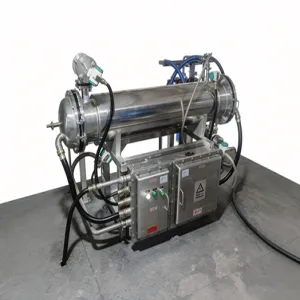
Horizontal photochemical reactor
Category: Horizontal Photochemical ReactorsBrowse number: 886Number:Release time: 2026-07-09 16:21:34Using im mersive cold light source irradiation technology with local modular electrical control design, space-saving stacking configuration, suitable for multi-stage parallel industrial photochemical production with lower energy consumption and flexible scalability.
News
Category:
-
[Blog]Photocatalytic Reactor for Solar Fuel Production
2026-07-29 03:19:43 -
[Blog]Photochemical Reaction Vessel for Scale Up Research
2026-08-02 03:17:55 -
[Blog]LED Parallel Light Reactor Research Applications Overview
2026-08-11 03:32:05
Case
Category:
No search results found!
Video
Category:
No search results found!
Download
Category:
No search results found!
Job
Category:
No search results found!
Featured Products
-
NEWS
Horizontal photochemical reactor
Learn more



 WhatsApp
 Phone
Phone