<span style="font-family: arial, helvetica, sans-serif; font-size: 16px; color: rgb(0, 0, 0);"><a href='https://www.raiscom.com/tag/uvled-light-sources' target='_blank' class='key-tag'><font><strong>UV-LED Light Sources</strong></font></a> for <a href='https://www.raiscom.com/tag/photochemical-applications' target='_blank' class='key-tag'><font><strong>Photochemical Applications</strong></font></a></span>UV-LED Light Sources for Photochemical Applications – My Practical Guide from Engineering Experience
I work with UV-LED Light Sources every day as part of industrial photochemical systems at
:contentReference.
Over the years, I’ve seen how this technology quietly changed the way labs and factories run light-driven chemical reactions.
Instead of relying on older mercury lamps or unstable light setups, more and more engineers now prefer UV-LED systems because they are cleaner, easier to control, and much more stable in long-term use.
In this article, I want to explain UV-LED Light Sources in a very straightforward way—from how they work, what makes them useful, where they are used, and what you should really care about if you are choosing one for your project. I’ll keep things practical, based on real engineering experience rather than theory-heavy explanations.
1. What Are UV-LED Light Sources (From My Perspective)
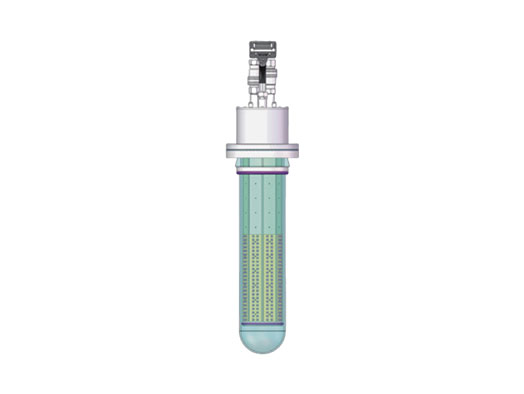
A UV-LED Light Source is basically a device that produces ultraviolet light using semiconductor chips instead of gas discharge or mercury vapor. In simple terms, it’s like switching from an old fluorescent tube to a modern energy-efficient LED bulb—but for ultraviolet wavelengths.
In my daily work, I usually describe it like this: it is a “controlled UV energy tool.” We don’t just turn it on and hope it works; we precisely design wavelength, intensity, beam shape, and cooling system depending on the chemical reaction requirement.
Common wavelengths include:
365 nm (deep UV curing and photochemistry)
385 nm (general photopolymerization)
395 nm (surface curing and industrial coatings)
Compared with traditional UV lamps, UV-LED Light Sources are more stable and much easier to integrate into modular photochemical systems such as UV reactors, flow chemistry systems, and lab-scale photoreactors.
2. How UV-LED Light Sources Work (Simple Explanation)
Let me break it down in a simple way.
Inside a UV-LED module, there are semiconductor chips. When electricity passes through, electrons move and release energy in the form of UV photons. These photons are what trigger chemical reactions in materials.
The key point here is control. Unlike traditional lamps that “spread light everywhere,” UV-LED systems allow us to control:
In photochemical applications, this control is everything. Even a small change in intensity can affect yield, purity, or reaction speed.
In our systems, we often combine UV-LED Light Sources with reactor chambers, mixing systems, and temperature control modules to build a full Photochemical Reaction platform.
3. Key Features I Always Highlight to Clients
When customers ask me why they should consider UV-LED technology, I usually focus on a few practical points rather than technical marketing terms.
3.1 Long Lifetime
Most UV-LED modules can operate for 10,000–20,000 hours. That means less replacement and less downtime.
3.2 Instant On/Off
No warm-up time. You press the switch, and it works immediately. This is very important for controlled experiments.
3.3 Low Heat Output
Compared to mercury lamps, UV-LED produces much less unwanted heat. That helps protect heat-sensitive chemicals.
3.4 Compact Modular Design
We design systems in modules so users can scale from lab experiments to pilot production without redesigning everything.
3.5 Environmentally Friendly
No mercury, no toxic gas. This makes compliance and disposal much easier.
4. Technical Advantages Compared with Traditional UV Systems
To make things clearer, I often show clients a comparison table like this.
| Feature | UV-LED Light Source | Traditional Mercury Lamp |
|---|
| Lifetime | 10,000–20,000 hours | 800–2,000 hours |
| Energy Efficiency | High (up to 60–70% electrical-to-UV conversion) | Low (below 30%) |
| Warm-up Time | Instant | 5–15 minutes |
| Heat Output | Low | Very High |
| Wavelength Control | Precise (single-band selectable) | Broad and unstable |
| Environmental Impact | No mercury, eco-friendly | Contains mercury |
Source: Internal engineering test data and industrial Photochemical Equipment benchmarking report (2025, Raiscom Application Lab)
5. Where UV-LED Light Sources Are Used
Over the years, I’ve seen UV-LED systems move from lab research into real industrial production. The application range is actually much wider than most people expect.
5.1 Photocatalysis
Used in environmental treatment, water purification, and air cleaning. UV light activates catalysts to break down pollutants.
5.2 Material Synthesis
Used in creating polymers, coatings, and advanced materials with controlled properties.
5.3 Pharmaceutical Research
UV-driven reactions help synthesize complex molecules with fewer side reactions.
5.4 Fine Chemical Production
Used in pigments, additives, and specialty chemicals where precision matters.
5.5 Environmental Engineering
Including wastewater treatment and degradation of organic contaminants.
6. Manufacturing Process and Quality Control
At :contentReference[oaicite:1]{index=1}, we don’t treat UV-LED Light Sources as simple electronic products. They are part of a complete photochemical system, so every step matters.
Our manufacturing process usually includes:
LED chip selection and wavelength sorting
Optical lens design for uniform irradiation
Thermal management system integration
Driver circuit calibration
Long-cycle aging tests
One thing I insist on is stability testing. We run continuous operation tests for hundreds of hours to make sure intensity decay stays within acceptable limits.
We also simulate real working environments—temperature changes, humidity exposure, and continuous switching cycles. This is important because lab conditions are always different from factory conditions.
7. Why Clients Choose Us (My Honest View)
I’ve worked with many clients in photochemistry, and their needs are usually very practical: stable output, easy integration, and reliable long-term performance.
Here’s why many of them choose our UV-LED Light Sources:
We design systems specifically for photochemical reactions, not just lighting
We support customization for wavelength, power, and reactor compatibility
We provide full system integration (not just standalone lamps)
We offer technical support during scale-up from lab to production
In real projects, the difference between a good and average UV system is not just the light itself—it’s how well the system integrates with the chemical process. That’s where engineering experience really matters.
8. Product Specifications Overview (Typical Models)
| Model Type | Wavelength | Power Range | Irradiance | Cooling Method |
|---|
| UV-LED Lab Module | 365 nm | 10–50 W | 50–150 mW/cm² | Air cooling |
| UV-LED Pilot System | 365/385 nm | 100–500 W | 150–500 mW/cm² | Air + heat sink |
| Industrial UV Reactor System | 365/385/395 nm | 1–5 kW | 500–2000 mW/cm² | Water cooling |
Source: Raiscom product engineering specifications (2025)
9. Frequently Asked Questions (FAQ)
Q1: Can UV-LED Light Sources replace mercury lamps completely?
In many applications, yes. Especially in curing, photochemistry, and lab-scale reactions. However, some high-intensity industrial processes may still require hybrid systems.
Q2: How long does a UV-LED system last?
Typically between 10,000 and 20,000 hours depending on usage conditions and cooling efficiency.
Q3: Can I customize wavelength and power?
Yes. We regularly design customized UV-LED Light Sources for different reaction requirements.
Q4: Is maintenance difficult?
Not really. Most maintenance involves cleaning optical surfaces and checking cooling systems.
Q5: Do you provide full photochemical system integration?
Yes. We can integrate UV-LED Light Sources into complete photoreactors, including control systems and flow modules.
Final Thoughts
From my experience, UV-LED Light Sources are not just a replacement technology—they are a step forward in how we control light-driven chemistry. They make processes more stable, more efficient, and easier to scale.
As industries move toward cleaner and more precise production methods, I believe UV-LED technology will become the standard for most photochemical applications.
If you are working on photochemical equipment or planning to scale up a Reaction System, understanding UV-LED Light Sources is no longer optional—it’s essential.


 Español
 Pусский
 Deutsch
 日本語
日本語 한국어
한국어 हिन्दी
 Indonesia
 Melayu
 Tiếng Việt



 WhatsApp
 Phone
Phone