

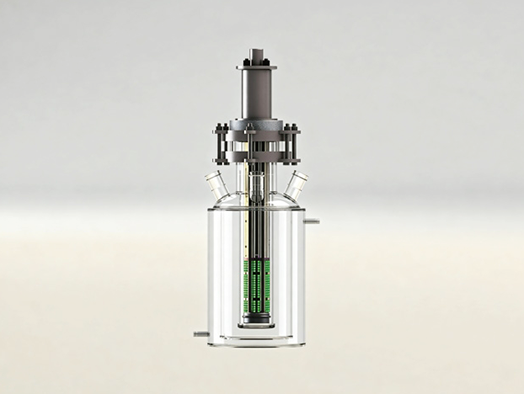
Photocatalytic reactor equipment performance optimization is the process of improving the efficiency, stability, throughput, and energy utilization of systems designed for photocatalytic treatment and conversion applications. These systems are widely used in advanced oxidation processes, water purification, air treatment, environmental remediation, and specialty chemical processing. As demand grows for clean, low-energy, and high-performance treatment technologies, optimizing photocatalytic reactor equipment has become a critical engineering priority for industrial users, integrators, researchers, and EPC project teams.
A high-performing photocatalytic reactor is not defined by a single component. Instead, reactor performance depends on a full system balance that includes light source design, catalyst activation, fluid dynamics, mass transfer, residence time, hydraulic distribution, temperature control, reactor geometry, cleaning strategy, and operational monitoring. When these variables are properly engineered, the result is improved reaction rates, better pollutant degradation, lower operating cost, longer equipment life, and more stable output quality.
This guide provides a clear, original, SEO-friendly overview of photocatalytic reactor equipment performance optimization, including definitions, benefits, technical factors, design considerations, common performance bottlenecks, specification tables, and practical optimization methods. The content is intentionally structured for use on blog pages, category pages, industry pages, knowledge bases, and HTML-based content blocks.
Photocatalytic reactor equipment performance optimization refers to the systematic improvement of reactor components and operating conditions to maximize photocatalytic reaction efficiency. In practical terms, this means enhancing how the reactor uses photons, catalyst surfaces, and contact time to achieve the desired chemical transformation or contaminant removal.
The goal is to improve key performance indicators such as reaction conversion rate, pollutant degradation efficiency, photon utilization efficiency, pressure drop, energy consumption, catalyst recovery, maintenance interval, and overall process stability. Optimization may apply to a laboratory reactor, pilot-scale system, modular industrial reactor, or full-scale process installation.
Because photocatalytic reactions are highly sensitive to light intensity, catalyst dispersion, reactor geometry, and fluid flow behavior, even small design changes can cause major performance differences. This is why equipment optimization is essential for any system intended for consistent, scalable, and cost-effective operation.
In many applications, photocatalytic treatment is selected because it offers advanced oxidation, minimal chemical residue, strong contaminant breakdown potential, and compatibility with sustainable process design. However, poor reactor design can reduce the benefits of the technology. Without optimization, a system may waste light energy, underutilize catalyst surfaces, create dead zones, or deliver inconsistent treatment results.
Optimized reactor equipment can significantly improve operational reliability and total lifecycle value. It also supports better scale-up from bench tests to production systems, which is one of the most challenging steps in photocatalytic technology deployment.
| Optimization Goal | Technical Benefit | Operational Result |
|---|---|---|
| Increase light utilization | Better photon absorption and reflection control | Higher reaction efficiency |
| Improve mass transfer | Better contact between reactants and catalyst | Faster degradation or conversion |
| Reduce energy loss | Lower unnecessary power consumption | Lower operating cost |
| Prevent fouling | Cleaner surfaces and stable flow paths | Longer service life |
| Stabilize process output | Controlled residence time and uniform irradiation | Reliable treatment quality |
To understand performance optimization, it is important to identify the main components that shape reactor behavior. A photocatalytic reactor system generally includes a reaction chamber, illumination source, catalyst interface, flow management structure, sealing and support assembly, and control instrumentation.
| Component | Function | Performance Impact |
|---|---|---|
| Reactor chamber | Contains the reaction environment | Determines internal flow, exposure, and scaling capacity |
| Light source | Provides UV, visible, or combined irradiation | Controls activation efficiency and photon flux |
| Catalyst support | Holds or distributes the catalyst material | Affects active surface area and recovery |
| Hydraulic system | Manages liquid or gas flow through the reactor | Influences residence time and mixing uniformity |
| Cooling or thermal control | Stabilizes operating temperature | Prevents thermal degradation and efficiency loss |
| Control panel and sensors | Monitors power, flow, temperature, and performance data | Supports accurate tuning and process stability |
Performance optimization requires attention to several interrelated variables. The most important factors include radiation distribution, catalyst loading, reactor geometry, fluid residence time, flow pattern, oxygen availability, pH compatibility, temperature stability, and surface fouling resistance.
The light source must be matched to the photocatalyst’s activation spectrum. If the wavelength range does not align with the catalyst’s band gap or absorption profile, much of the emitted energy is wasted. High-quality photocatalytic reactor equipment should maintain consistent intensity, controlled spectral output, and even distribution across the reaction zone.
Reactor shape affects photon penetration, internal reflection, pressure drop, and fluid movement. Narrow channels, annular designs, tubular structures, flat-plate configurations, and slurry reactors each have different optimization requirements. The best geometry depends on the application, throughput target, catalyst type, and required treatment intensity.
Catalyst performance depends on how much active surface is exposed to both light and reactants. Fixed-bed, coated-surface, suspended-slurry, and immobilized-catalyst systems each offer different advantages. Optimization often focuses on maximizing active area while minimizing aggregation, sedimentation, or surface blockage.
Effective photocatalysis depends on efficient mass transfer between the fluid phase and catalyst surface. Poor mixing can create concentration gradients and reduce reaction rates. Reactor equipment should promote turbulence, reduce dead zones, and maintain uniform exposure throughout the treatment volume.
Residence time is the duration that a reactant remains in the active treatment zone. If residence time is too short, conversion may be incomplete. If it is too long, throughput may decline and energy cost may rise. Optimization seeks a balanced residence time that supports both process efficiency and productivity.
Temperature influences reaction kinetics, catalyst stability, and light source performance. Many photocatalytic systems benefit from thermal stabilization because excessive heat can reduce catalyst lifetime, shift reaction pathways, or degrade optical components.
Deposits on reactor windows, catalyst surfaces, or internal channels can block light and reduce active area. Anti-fouling design, smooth flow paths, periodic flushing, and cleanability are important aspects of long-term equipment performance.
Different reactor types require different optimization strategies. The following table summarizes common configurations and typical performance considerations.
| Reactor Type | Typical Use | Optimization Focus |
|---|---|---|
| Slurry reactor | High surface contact for laboratory or pilot treatment | Separation, sediment control, light penetration |
| Fixed-bed reactor | Immobilized catalyst processes | Pressure drop, uniform flow, catalyst surface accessibility |
| Annular reactor | Uniform irradiation and compact design | Radial light distribution, channel flow control |
| Tubular reactor | Continuous treatment systems | Residence time, axial mixing, scale-up consistency |
| Flat-plate reactor | Controlled surface exposure and high optical efficiency | Photon path length, fluid film thickness, surface loading |
| Membrane-integrated reactor | Separation combined with photocatalysis | Permeability, fouling resistance, cleaning cycle design |
Proper optimization delivers measurable technical and economic advantages. These benefits are relevant for water treatment, air purification, disinfection, industrial effluent processing, and specialty synthesis systems.
There is no single universal optimization method. The most effective strategy is usually a combination of optical, hydraulic, mechanical, and operational improvements. The following approaches are widely used in industry and technical development.
Light delivery should be engineered to minimize shadowing and maximize catalyst exposure. This can include reflector design, lamp placement, internal light guides, transparent reactor walls, and wavelength matching. Uniform irradiation is especially important in larger systems where light attenuation can be significant.
Flow design should encourage good mixing without causing excessive pressure loss. Baffles, channel shaping, recirculation loops, and controlled inlet distribution can improve contact efficiency and reduce stagnant zones. In continuous systems, smooth hydraulic design is essential for stable processing.
Too little catalyst reduces activity, while too much catalyst can block light and create mass transfer limitations. The optimal loading depends on the target compound, reactor size, light intensity, and catalyst form. Pilot testing is often necessary to identify the best loading range.
Optical losses occur when light is reflected, scattered, or absorbed by nonproductive surfaces. Reactor walls, support structures, and fluid turbidity can all reduce usable photon flux. Transparent materials, clean surfaces, and shorter optical paths can help improve performance.
pH, temperature, flow rate, oxidant concentration, dissolved oxygen, and inlet pollutant concentration may all affect reaction behavior. Automated control systems can help maintain optimum conditions and improve repeatability.
In slurry systems, catalyst separation and reuse are important for commercial viability. In immobilized systems, catalyst adhesion and mechanical durability are critical. The best equipment design minimizes catalyst loss and preserves activity over multiple cycles.
The following specification table provides a general reference for common photocatalytic reactor equipment parameters. Actual values vary by application, scale, catalyst, and process goals.
| Specification Item | Typical Range | Optimization Relevance |
|---|---|---|
| Reactor volume | Laboratory to industrial scale | Determines throughput and residence time |
| Light wavelength | UV to visible spectrum | Must match catalyst activation profile |
| Light intensity | Application-specific | Impacts reaction rate and energy use |
| Flow rate | Variable based on design | Controls exposure time and productivity |
| Residence time | Seconds to hours | Defines conversion opportunity |
| Operating temperature | Ambient to moderately controlled | Influences kinetics and stability |
| Pressure drop | Low to moderate depending on reactor type | Affects pumping energy and flow uniformity |
| Catalyst form | Powder, coated film, immobilized layer | Changes surface area and recovery method |
| Material of construction | Glass, quartz, stainless steel, polymer composites | Controls durability, optical transmission, and compatibility |
| Cleaning interval | Process-dependent | Influences uptime and maintenance planning |
To optimize a photocatalytic reactor, performance must be measured consistently. The most common indicators include degradation efficiency, conversion rate, electrical energy per order, quantum efficiency, catalyst lifetime, and pressure stability.
| Performance Indicator | What It Measures | Why It Matters |
|---|---|---|
| Degradation efficiency | Percentage of target compound removed | Shows treatment effectiveness |
| Conversion rate | Speed of chemical transformation | Indicates reactor productivity |
| Energy efficiency | Treatment achieved per unit energy | Supports cost reduction |
| Quantum yield | Reaction efficiency per absorbed photon | Reflects optical utilization quality |
| Pressure drop | Hydraulic resistance in the reactor | Impacts pumping requirements |
| Catalyst stability | Retention of activity over time | Determines long-term usability |
Scale-up is one of the most important challenges in photocatalytic reactor equipment performance optimization. A configuration that works well in a lab may not perform the same in a large continuous system. During scale-up, engineers must preserve light distribution, residence time consistency, catalyst utilization, and mass transfer efficiency.
Important scale-up considerations include reactor aspect ratio, optical path length, modular expansion capability, heat management, cleaning access, structural support, and instrumentation integration. Systems designed with modularity in mind are often easier to optimize because capacity can be expanded without completely redesigning the process.
Many performance issues can be traced to predictable design or operation flaws. The table below summarizes common problems and practical optimization responses.
| Common Problem | Likely Cause | Practical Solution |
|---|---|---|
| Low degradation efficiency | Insufficient light, poor catalyst loading, or short residence time | Improve illumination, adjust catalyst dosage, or slow flow rate |
| Uneven treatment | Poor flow distribution or dead zones | Redesign inlet geometry and mixing structure |
| High energy consumption | Light losses and low photon utilization | Match wavelength, reduce optical loss, and optimize reflector design |
| Frequent fouling | Surface contamination or poor cleaning access | Use anti-fouling surfaces and maintain regular cleaning cycles |
| Pressure instability | Restricted flow or channel blockage | Improve hydraulic path and remove obstruction points |
| Catalyst loss | Inadequate immobilization or separation | Upgrade catalyst support or recovery method |
Material selection has a direct impact on optical transmission, corrosion resistance, cleanability, and long-term reliability. Choosing the right material is part of reactor equipment optimization and depends on whether the system is designed for water, air, gas-phase chemistry, or multiphase treatment.
| Material | Main Advantage | Typical Use |
|---|---|---|
| Quartz | Excellent UV transmission | High-irradiation reactor windows and tubes |
| Borosilicate glass | Good chemical resistance and transparency | Lab and pilot systems |
| Stainless steel | Strength and durability | Support frames, housings, and industrial enclosures |
| PTFE and fluoropolymers | Chemical resistance and low surface adhesion | Corrosion-prone process zones |
| Ceramic materials | Thermal stability and wear resistance | Specialized catalyst support structures |
For businesses, publishers, and technical portals, high-quality content about photocatalytic reactor equipment performance optimization can support organic search visibility and build topical authority. Search engines reward pages that provide clear definitions, structured sections, tables, and topic depth. Well-organized industry content also improves user engagement by helping readers quickly understand performance factors, reactor types, and technical terminology.
The following keyword set is commonly associated with this subject area and can be used naturally in page copy, headings, metadata, and internal linking structures:
Photocatalytic reactor equipment performance optimization is a multidisciplinary process that combines optical engineering, chemical process design, fluid mechanics, material selection, and operational control. The most effective reactors are not simply those with the strongest light source or the largest catalyst load. They are the systems that achieve the best balance between light utilization, flow uniformity, catalyst activity, energy consumption, and long-term reliability.
For industrial users and content publishers alike, this topic offers strong value because it sits at the intersection of environmental technology, advanced materials, and process engineering. A well-optimized photocatalytic reactor can deliver higher efficiency, lower operating cost, and more dependable results, while well-structured content on this subject can improve SEO performance, topical relevance, and user trust.
If you are building an industry page, knowledge article, product-category introduction, or technical blog section, the information above can be inserted directly into an HTML page and expanded further with application-specific details, internal links, and supporting diagrams.
```
ADD: Building 7, Zhongji Zhigu Industrial Park, Liantang Ave,Shanghu Town,Changshu, Jiangsu
Tel: 0512-65560736 / 0512-65371556
Mobile: +86 13584913897 / +86 13771738377 (Sales)
Email: jkzdhsm@yeah.net
This website uses cookies to ensure you get the best experience on our website.
 Español
 Pусский
 Deutsch
 日本語
 한국어
 हिन्दी
 Indonesia
 Melayu
 Tiếng Việt



 WhatsApp
 Phone
Comment
(0)